
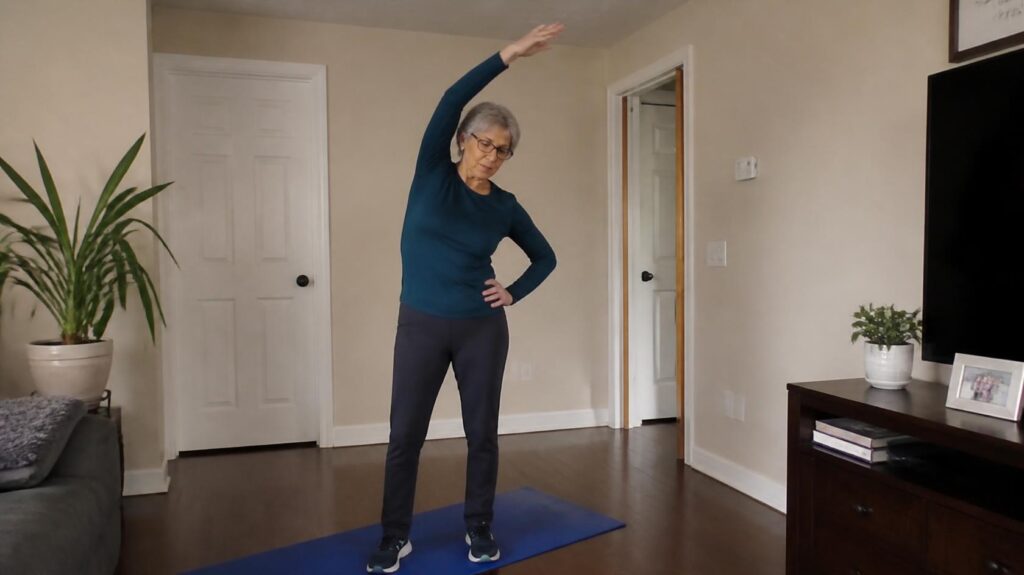
You already know exercise would help. You have read that it protects balance, eases stiff joints, lifts mood and helps an older person stay independent for longer. The problem is not the information. The problem is the response you get when you suggest it.
“I’m fine as I am.” “I’m too old for all that.” “Maybe tomorrow.”
If that sounds familiar, you are not failing. Encouraging an older person to move is one of the most delicate parts of caring for them, because it sits right at the meeting point of their health and their pride. Push too hard and you cause a row. Say nothing and they slowly lose strength.
At Bentleys Homecare, we help families across Dundee navigate exactly this every day. This guide is not another list of exercises. It is about the far trickier question of how to actually get someone to want to do them.
First, Understand Why They Are Really Resisting
“I can’t be bothered” is almost never the real reason. Behind a flat refusal there is usually a genuine and understandable fear. When you know what you are actually dealing with, your approach changes completely.
| What they say | What is often really going on |
|---|---|
| “I might fall” | A real, sensible fear after a wobble or a previous fall |
| “It hurts” | Worry that movement will make pain worse, not better |
| “What’s the point at my age” | Low mood, or a sense that decline is inevitable |
| “I don’t need telling what to do” | Feeling managed, or losing control over their own life |
| “I’ll do it later” | Embarrassment at how much harder it has become |
Notice that only one of these is about the exercise itself. The rest are about fear, dignity and identity. That is the ground you are really working on.
Start With Their Reason, Not Yours
Your reason for wanting them to exercise is that you love them and you are frightened of losing them. That is a wonderful reason, but it is yours, not theirs. It rarely motivates anyone.
The trick is to connect movement to something they personally care about. Not “you need to exercise” but something that matters to them in their own words:
- Being steady enough to keep living in their own home.
- Getting to the bathroom at night without help.
- Walking to the front window to watch the grandchildren arrive.
- Managing the stairs so they can still sleep in their own bedroom.
- Being able to get out to their favourite spot in Dundee.
When exercise becomes the path to something they want, rather than a chore you are imposing, the whole conversation shifts.
Make the First Step Almost Too Small
The biggest mistake families make is aiming too high. A twenty minute routine feels like a mountain to someone who is tired, sore or lacking confidence, so they never start.
Make the first ask so small it feels almost silly to refuse. For example:
- Standing up and sitting down from the chair three times.
- Marching the feet while the kettle boils.
- Rolling the shoulders during the news.
Success builds motivation far better than any lecture. Once someone has done a tiny thing and felt fine afterwards, they are far more willing to do a little more tomorrow. Our post on simple exercise routines for elderly people at home is a good place to find gentle starting points.
Build It Into the Day, Not On Top of It
Older people rarely warm to the idea of a separate “exercise time.” It sounds effortful and clinical. Movement is far more likely to stick when it is tied to something already happening.
Link a small amount of activity to an existing habit:
- A few leg lifts while the morning radio is on.
- Standing up during every advert break.
- A slow walk to the end of the garden after lunch each day.
Health guidance encourages older adults to be active every day, with a little strength and balance work a couple of times a week. Spread across the day in small pieces, that is far more achievable than one long session, and much easier to sustain.
Make It Social, Not Solitary
Very few of us enjoy exercising alone, and older people are no different. What can feel like a lonely chore in an empty room becomes something quite different in good company.
Sit with them and do the movements together. Put on music they love from their younger years. Turn it into a chat rather than a workout. The presence of another person provides encouragement, gentle accountability and, just as importantly, company.
This is one of the reasons companionship matters so much in later life, and it sits at the heart of our befriending and social care support. When movement is wrapped up in a pleasant social visit, it stops feeling like medicine.
The Words That Help and the Words That Harm
How you say something matters as much as what you say. Small changes in language can be the difference between cooperation and a closed door.
| Try to avoid | Try instead |
|---|---|
| “You have to do your exercises.” | “Shall we do a few together while I’m here?” |
| “You’re not even trying.” | “That was more than yesterday. Well done.” |
| “Come on, it’s easy.” | “Take your time, there’s no rush at all.” |
| “You’ll end up in a home if you don’t.” | “This helps you stay in your own house, where you love to be.” |
| “I’ll do that for you.” | “Let me help you do it yourself.” |
The theme running through the right hand column is respect. You are offering support, not taking over, and you are treating an adult as an adult.
Expect Bad Days and Do Not Punish Them
There will be days when they simply will not, or cannot. Pain, tiredness, low mood and poor sleep are all real, and pushing hard on a bad day can undo weeks of goodwill.
On those days, lower the bar rather than the effort. Even one gentle stretch counts. Reassure them that resting today does not mean giving up, and try again tomorrow without a hint of disappointment in your voice.
Consistency over months matters far more than any single session. Someone who moves a little most days, with the occasional day off, will do far better than someone pushed so hard they refuse to try again.
Guidance Specifically for Carers
If you are caring for someone who is not your own relative, you carry a particular kind of trust. A few principles help enormously:
- Ask, do not instruct. Offer choices so the person keeps a sense of control.
- Watch and adapt. Notice pain, breathlessness or fatigue, and ease off at once.
- Record quietly. Note what they managed, so progress can be seen over time.
- Protect their dignity. Never make them feel tested, judged or hurried.
Seated movement is often the safest and least intimidating way to begin, especially for someone worried about falling. Our guide to seated exercises for elderly people is designed for exactly this.
Know When to Bring in Support
Sometimes the most loving thing a family can do is accept that encouragement has become too much for them to manage alone. That is not a failure. Constant prompting can strain even the closest relationship, and it is often easier for an older person to accept help from a friendly professional than from a worried son or daughter.
It is worth seeking proper support when:
- Fear of falling is stopping them moving at all.
- There is pain, or a health condition, that needs a tailored approach.
- Your reminders are starting to cause tension or upset.
- Progress has stalled and motivation has drained away.
How Bentleys Homecare Helps Families in Dundee
At Bentleys Homecare, we understand that keeping an older person active is rarely about the exercises themselves. It is about patience, trust and encouragement, day after day, and that is a great deal to ask of a family that is already stretched.
Our carers provide that steady, friendly support in the home. Through our exercise, rehab and nutrition at home service, we help older people across Dundee build a safe, gentle routine, offering the company and encouragement that makes movement something to look forward to rather than dread.
If you are struggling to keep a loved one active, you do not have to manage it alone. Get in touch with our team and we will help you find an approach that protects both their health and your relationship with them.