
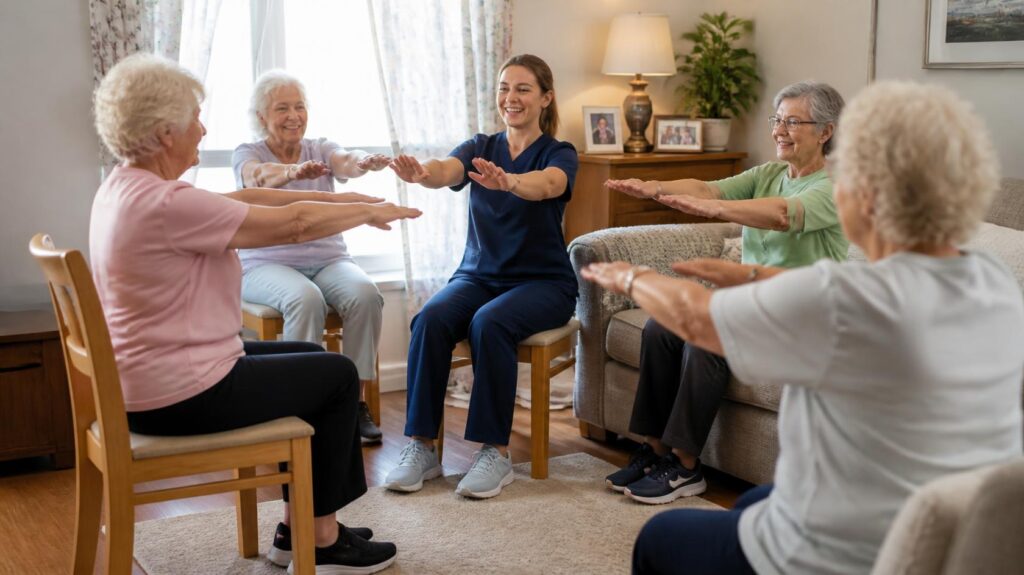
Growing older often brings changes to our physical abilities. For many elderly people living in Dundee, mobility issues can make traditional physical activity feel impossible. Conditions such as arthritis, joint pain, or a general decline in balance can make standing for long periods uncomfortable or unsafe. However, experiencing a change in mobility does not mean you have to stop moving altogether. Staying active is completely possible, and highly beneficial, even from a seated position.
At Bentleys Homecare, we strongly advocate for gentle movement tailored to the individual. Seated exercises offer a safe and highly effective way to maintain muscle strength, improve joint flexibility, and boost overall health without the risk of falling. This comprehensive guide explores how older adults can stay active from the comfort of their own armchair or dining chair.
The Benefits of Seated Exercises for Older Adults
When people think of exercise, they often picture running or lifting heavy weights. This misconception can discourage older adults from trying to stay fit. In reality, the body responds incredibly well to gentle, consistent movement.
One of the primary benefits of seated exercise is improved circulation. When we sit still for extended periods, blood flow to the lower legs slows down. This can lead to swelling in the ankles and feet. Simple leg movements performed in a chair encourage the blood to pump efficiently back to the heart, reducing swelling and the risk of blood clots.
Regular seated movement also helps to keep the joints lubricated. Joints that are not moved regularly become stiff and painful. Gently moving the shoulders, hips, and knees through their natural range of motion eases this stiffness and makes daily tasks much more manageable.
Finally, we must acknowledge the mental health benefits. Moving the body releases endorphins, which act as natural mood lifters. Completing a daily exercise routine provides a satisfying sense of achievement and can significantly reduce feelings of anxiety or sadness that sometimes accompany a loss of physical independence.
How to Prepare a Safe Space for Chair Exercises
Before starting any new physical routine, it is always recommended to consult a doctor, especially if you have existing health conditions. Once you are cleared to begin, taking the time to set up your environment ensures the activity remains safe and enjoyable.
Choosing the right chair is the most important step. You should avoid soft, sinking armchairs or sofas, as they do not provide enough support for your spine. You must also avoid chairs with wheels, such as office chairs, as these can easily slide away and cause an accident. The ideal choice is a solid dining chair with a firm seat and a straight backrest.
Ensure the room is well lit and completely free of clutter. You do not want to knock over a side table or trip over a rug while getting into your chair. Wear loose clothing that does not restrict your movement, and choose flat shoes that provide good grip on the floor. Keep a large glass of water within easy reach so you can take frequent sips.
Posture and Breathing: The Foundation of Every Routine
The success of a seated workout depends entirely on good posture. If you slump forward in the chair, you limit your lung capacity and place unnecessary strain on your lower back.
To find the correct posture, sit slightly forward from the backrest of the chair. Place both feet entirely flat on the floor, hip width apart. Imagine a piece of string attached to the top of your head, gently pulling you upwards. This thought helps to lengthen the spine, lift the chest, and pull the shoulders back and down. You should aim to hold this tall posture throughout the entire routine.
Before moving your limbs, take a moment to focus on your breathing. Place your hands lightly on your stomach. Breathe in deeply through your nose for a count of three, feeling your stomach push outwards against your hands. Breathe out slowly through your mouth for a count of four. Repeat this deep breathing pattern five times. This oxygenates the blood and signals to your body that it is time to relax and focus.
Phase One: Gentle Warm-Up Exercises
Warming up prepares the muscles for the work ahead and prevents sudden strains. These movements should be slow, controlled, and completely pain free.
Neck Mobility
Keep your shoulders perfectly still. Slowly turn your head to look over your right shoulder. Stop when you feel a gentle stretch, hold it for two seconds, and return to the centre. Repeat this by looking over your left shoulder. Complete this movement three times on each side to release tension in the neck.
Shoulder Shrugs and Rolls
Still sitting tall, gently lift both shoulders up towards your ears. Hold them there for a second, then let them drop back down entirely. Do this three times. Next, roll your shoulders in a backward circle four times, followed by four forward circles. This warms up the upper back and chest.
Torso Twists
Cross your arms lightly over your chest. Keep your feet flat and your knees pointing straight forward. Slowly turn your upper body to the right, as if you are trying to look at something on the wall beside you. Slowly turn back to the centre, then twist to the left. Complete four twists to each side. This wakes up the core muscles.
Phase Two: Lower Body Strength and Circulation Exercises
Strengthening the legs from a seated position helps with standing up from the toilet, getting out of bed, and walking safely around the house.
Heel and Toe Taps
Start with both feet flat on the floor. Keeping your heels glued to the ground, lift your toes up towards the ceiling as high as you can. Lower them back down. Next, keep your toes on the floor and lift your heels up, imitating the motion of wearing high heels. Alternate between lifting the toes and lifting the heels ten times. This is excellent for ankle flexibility and calf strength.
Seated Marches
Hold the edges of your chair for stability. Lift your right knee up towards the ceiling, then place the foot back down. Lift your left knee and place it down. Continue marching on the spot with a steady rhythm for one full minute. If you want to increase the effort, you can pump your arms at the same time. This exercise elevates the heart rate and warms the hip joints.
Leg Extensions
Sit securely in the middle of your chair. Slowly straighten your right leg out in front of you until it is parallel with the floor. Pull your toes back towards your body to stretch the calf. Hold this straight leg position for three seconds, then lower the foot back to the ground. Complete eight extensions on the right leg, then switch and do eight on the left. This builds the large muscles on the front of the thighs.
Phase Three: Upper Body Mobility Exercises
Maintaining movement in the arms and shoulders is essential for reaching items on shelves, brushing your hair, and getting dressed independently.
Forward Arm Reaches
Sit tall and hold your arms out in front of you at chest height, keeping your elbows slightly bent. Push your hands forward as if you are trying to push open a heavy door. Pull your hands back towards your chest, squeezing your shoulder blades together as you do so. Repeat this pushing and pulling motion ten times.
Overhead Reaches
Start with your hands resting on your knees. Slowly lift your right arm up and reach towards the ceiling. Stretch as high as feels comfortable without causing pain in the shoulder joint. Slowly lower the arm back to your knee. Repeat with the left arm. Complete six reaches on each side. If reaching straight up is too difficult, reach diagonally forward instead.
Wrist and Finger Flexibility
Arthritis frequently affects the hands, making grip strength a challenge. Hold your hands out in front of you. Open your fingers as wide as possible, stretching the palms. Then, squeeze your hands into tight fists. Repeat this five times. Next, gently roll your wrists in slow circles, five times clockwise and five times anticlockwise.
Phase Four: Cool-Down Stretches
Stopping exercise abruptly can cause a sudden drop in blood pressure. A cool down allows the heart rate to return to normal gradually and stretches the muscles you have just used.
Chest Stretch
Sit slightly forward in your chair. Reach both arms behind you and try to hold the back of the chair. Gently push your chest forward and look straight ahead. You should feel a pleasant stretch across your chest and the front of your shoulders. Hold this position while breathing deeply for twenty seconds.
Back Stretch
Clasp your hands together in front of you. Push your hands away from your body while rounding your upper back, looking down towards your lap. Imagine you are hugging a large beach ball. Hold this stretch for twenty seconds to release tension between the shoulder blades.
Finish your session by repeating the deep breathing exercises from the beginning of the routine. Take a large drink of water to rehydrate.
Building a Sustainable Exercise Routine at Home
The most effective exercise routine is one that actually happens regularly. Consistency is far more important than intensity. Doing these seated exercises for fifteen minutes every day is much better than trying to exercise for an hour once a week and becoming exhausted.
Try linking your exercise session to an existing daily habit. For example, you might decide to complete your routine every morning immediately after listening to the early news bulletin, or just before your afternoon cup of tea. Having a specific trigger helps to build a lasting habit.
Keep a calendar near your chair and place a tick on the days you complete your routine. Seeing your progress visually is incredibly motivating. Always listen to your body; if you feel particularly tired on a certain day, it is perfectly acceptable to do only the warm up and the stretching phases.
Seated Exercise Support from Bentleys Homecare in Dundee
At Bentleys Homecare, we know that remaining independent is the main priority for the older adults we support across Dundee. Physical mobility plays a huge part in keeping that independence alive, but we understand that finding the motivation to exercise on your own can be challenging.
Our professional carers are available to help you build and maintain a safe exercise routine. We can assist in setting up your space, making sure your chair is stable and the room is free of hazards. We can sit with you while you complete your movements, offering encouragement, making sure your posture is correct, and ensuring you are drinking enough water. This support forms part of our wider Exercise, Rehab & Nutrition at home service.
Having a supportive companion turns a simple exercise routine into an enjoyable social activity, which is at the heart of our befriending and social care support. Whether you need a small amount of daily encouragement or more intensive practical assistance, Bentleys Homecare is dedicated to helping you stay active, healthy, and entirely in control of your life at home.
To find out how we can help you or your loved one stay active at home in Dundee, get in touch with our team.


Pingback: Balance Exercises for Elderly People | Reduce Fall Risk at Home