
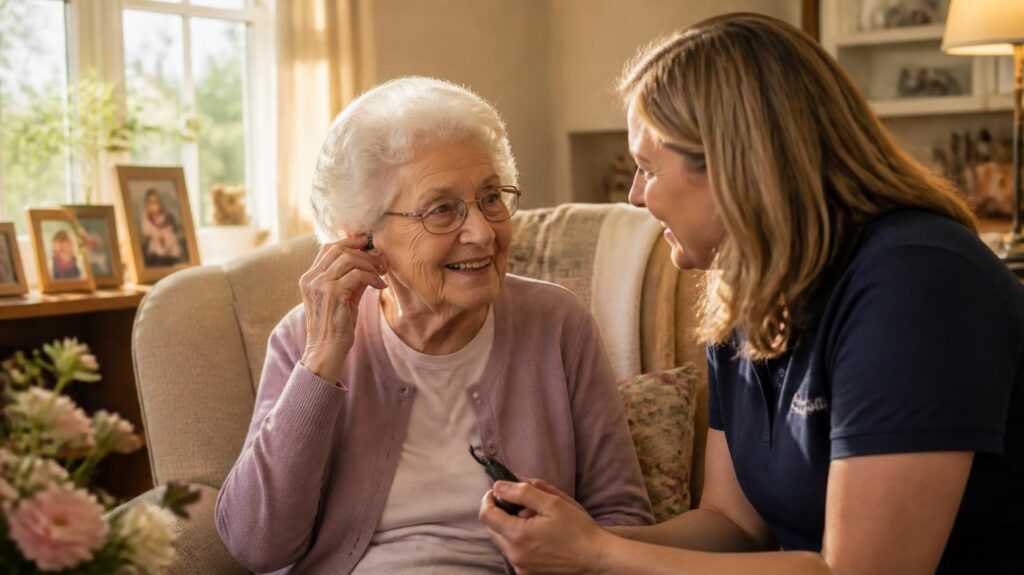
Sight and hearing loss rarely arrive overnight. They creep in slowly: the television gets a little louder, the newspaper is held a little further away, and phone calls become shorter. Because the changes are gradual, many older people and their families do not notice how much life has quietly shrunk until loneliness has already taken hold.
This guide explains how sight and hearing loss in older people can lead to isolation, why it matters for physical and mental health, and the practical steps that help people stay connected and confident at home. If you are worried about a relative in Dundee, it may help you spot the signs early and know where to turn.
How Common Is Sight and Hearing Loss in Older People?
Sensory loss is far more common in later life than many families realise, and the numbers are rising as our population ages.
- Hearing loss. According to RNID, more than half of people aged 55 and over have some hearing loss, rising to almost 80% of people over 70.
- Sight loss in Scotland. RNIB Scotland estimates that around 193,700 people in Scotland live with sight loss that affects daily life, and that more than 8,700 more will begin to lose their sight in the next 12 months.
- Macular degeneration. Around 58,000 people in Scotland are living with late stage age related macular degeneration, one of the leading causes of sight loss in older adults.
Many older people live with both. When sight and hearing decline together, it becomes much harder to compensate. Someone who cannot hear well usually relies on lip reading and facial expressions, which becomes almost impossible if their eyesight is also failing.
How Sight and Hearing Loss Lead to Isolation
Sensory loss does not usually cause isolation in one dramatic step. Instead, it slowly makes everyday social contact feel like hard work, until avoiding it seems easier.
With hearing loss, older people may:
- Find group conversations exhausting, especially in noisy cafés, church halls or family gatherings
- Stop answering the phone because they struggle to follow voices without seeing faces
- Nod along rather than ask people to repeat themselves, then feel left out and embarrassed
- Miss the doorbell, so visitors and deliveries are turned away without them knowing
With sight loss, older people may:
- Stop going out alone because steps, kerbs and busy roads feel unsafe
- Give up reading, crosswords, knitting or other hobbies they once loved
- Struggle to recognise faces in the street, which can be mistaken for unfriendliness
- Lose confidence with buses, money, letters and online shopping
Each of these changes is small on its own. Together, they can mean that a once sociable person rarely leaves the house or speaks to anyone for days at a time. Our article on how social isolation affects elderly health explains why this matters so much.
The Wider Health Risks of Untreated Sensory Loss
The effects of sight and hearing loss reach well beyond loneliness. Left unaddressed, they can affect physical safety, memory and mood.
Falls and accidents at home
Poor eyesight makes it harder to judge steps, spot trip hazards and move safely in dim light. Some types of hearing loss can also affect balance. Keeping the home clear and well lit makes a real difference, as our guide on how a clean home reduces fall risk explains, and gentle balance exercises help build steadiness and confidence.
Dementia risk
The 2024 Lancet Commission on dementia lists untreated hearing loss as one of the biggest risk factors for dementia that can be changed, and added untreated vision loss to its list for the first time. The report also found growing evidence that treating hearing loss, particularly with hearing aids, can reduce that risk. This is one of the strongest reasons to encourage regular hearing and eye checks.
Low mood and anxiety
Struggling to follow conversations or manage daily tasks can knock a person’s confidence and leave them frustrated, low or anxious. If you notice these changes, our article on recognising and managing anxiety in seniors offers helpful guidance.
Early Signs of Sight or Hearing Loss Families Should Look Out For
Older people often hide or play down sensory changes, sometimes without realising they are doing it. Family members and carers are frequently the first to notice.
|
Possible signs of hearing loss |
Possible signs of sight loss |
|---|---|
| The television or radio is turned up very loud | Bumping into furniture or doorframes |
| Often asking people to repeat themselves | Spills, stains or missed spots when cleaning |
| Answering questions that were not asked | Unopened post or unpaid bills piling up |
| Avoiding the phone or social events | Holding things very close or squinting |
| Seeming withdrawn or confused in conversation | Stopping hobbies such as reading or crafts |
| Not hearing the doorbell or kettle | Difficulty recognising familiar faces |
None of these signs alone means something is wrong, but a pattern is worth a gentle conversation. For a broader picture, our checklist of signs your elderly parent needs home care covers other changes to watch for.
Practical Ways to Help an Older Person with Sight or Hearing Loss
Small changes at home and in the way we communicate can make it far easier for an older person to stay connected and independent.
Communicating with someone who has hearing loss
- Face the person and make sure your face is well lit, so they can see your lips and expressions
- Get their attention before you start speaking, with a gentle touch on the arm or by saying their name
- Speak clearly at a normal pace; shouting distorts words and can feel aggressive
- Turn off the television or radio and choose a quiet spot for conversation
- If something is not understood, rephrase it rather than repeating the same words
Making the home easier for someone with sight loss
- Improve lighting, especially on stairs, in hallways and in the kitchen
- Use high contrast items, such as a dark mug on a light worktop or coloured tape on step edges
- Keep furniture in the same place and walkways clear of clutter
- Try large print books, talking clocks, big button phones and magnifiers
- Mark frequently used settings on the cooker and washing machine with raised bump dots
Keeping hobbies and friendships alive
Adapted activities can help people keep doing what they love. Audiobooks can replace reading, large print playing cards can keep a weekly card game going, and many local groups welcome people with sensory loss. Our guide to finding social activities for elderly people near you is a good starting point.
Getting Checked and Finding Support in Scotland
Many causes of sight and hearing problems can be treated or slowed, so the first step is always a proper check.
- Eye examinations. NHS eye examinations are free for everyone in Scotland. Most optometrists recommend a check at least every two years, or more often if they advise it. Many opticians also offer home visits for people who cannot easily get out.
- Hearing tests. Speak to the GP, who can refer your relative to the NHS Tayside audiology service. NHS hearing aids, batteries and follow up appointments are provided free of charge.
- Hearing aid support. Hearing aids only help if they are worn and working. Regular cleaning, fresh batteries and help with fitting the earpieces all make a difference.
- Charities and specialist help. RNIB Scotland and RNID both offer advice lines and information for older people and their families.
Getting to appointments can be a barrier in itself, particularly for someone who no longer drives. Our concierge service can accompany your relative to opticians, audiology clinics and GP appointments, so nothing important is missed.
How Home Care and Befriending Help People with Sensory Loss
The right support at home can stop sight and hearing loss from shrinking someone’s world. It works best when it is matched to the person’s specific needs.
Choosing the right type of befriending
- For hearing loss, in person befriending is usually the better choice. Face to face visits allow lip reading and clear body language, and a befriender can help with trips out to cafés, gardens or local groups.
- For sight loss, telephone befriending can be ideal. A regular call needs no travel, no reading and no screens, and gives the person something to look forward to. Our article on how regular phone calls improve mental health explains why this simple routine works so well.
Not sure which suits your relative? Our comparison of telephone befriending vs in person befriending can help you decide.
Everyday practical support
- Reading post and managing paperwork, so letters and bills are not missed
- Keeping the home safe and tidy with a regular cleaning service, including spotting hazards that are hard to see
- Checking hearing aids and glasses are clean, working and actually being used
- Help with washing, dressing and medication through personal care at home, when tasks have become difficult or unsafe
How Bentleys Homecare Supports People with Sight and Hearing Loss in Dundee
At Bentleys Homecare, we know that sensory loss affects far more than eyes and ears. It touches confidence, friendships and the simple pleasures that make each day worthwhile.
- Familiar faces. Our small, consistent team means your relative sees the same carers each visit. This matters even more when someone relies on recognising a voice or learning to lip read a particular person.
- Patient, clear communication. Our carers take the time to speak clearly, check understanding and never rush a conversation.
- A whole person approach. Through our Physical, Social and Psychological Recovery Plan (PSPR), we look at physical safety, social connection and emotional wellbeing together, rather than treating each in isolation.
- Support that fits. From a weekly phone call to daily visits, care is built around what your relative needs and wants.
We support older people across Dundee, Broughty Ferry, Monifieth, Carnoustie, Invergowrie and the surrounding areas.
Helping Your Loved One Stay Connected
Sight and hearing loss are a common part of ageing, but isolation does not have to be. With early checks, simple changes at home, patient communication and the right support, older people can stay independent, safe and connected to the people and activities they love.
If you are worried that sensory loss is cutting your relative off from the world, the team at Bentleys Homecare is here to help. Contact us today or call 01382 722 037 for a friendly, no obligation chat about home care and befriending in Dundee.