
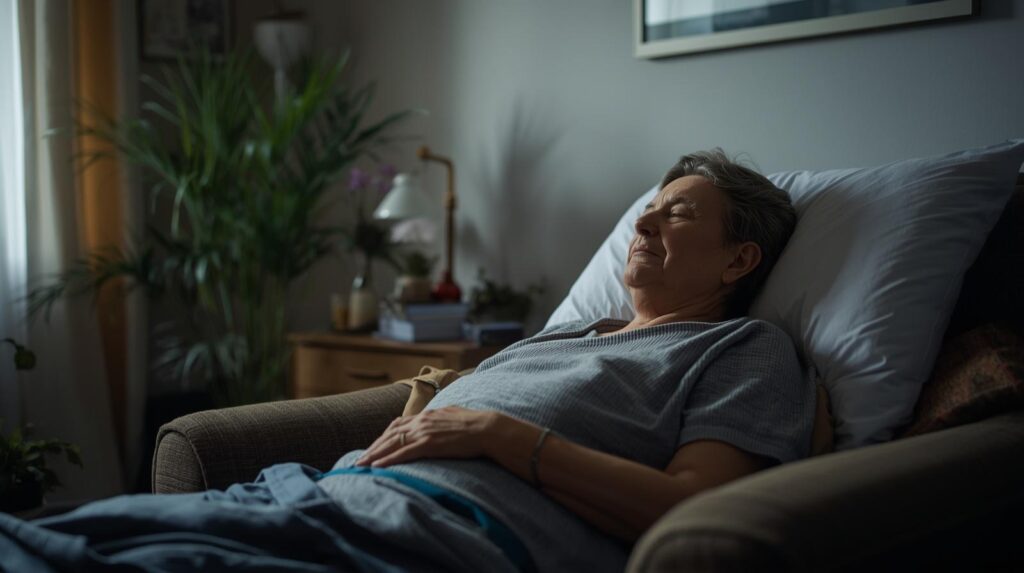
The day a stroke survivor is discharged from the hospital is usually met with a profound mix of relief and intense anxiety. If your loved one has been treated at Ninewells Hospital in Dundee, they will have received exceptional, fast-paced acute medical care. The consultants, nurses, and therapists work miracles to stabilize the brain and initiate early recovery.
But when the ambulance drops them off at their own front door in Broughty Ferry, Monifieth, or West Ferry, a strange and daunting silence sets in. The monitors are gone. The round-the-clock medical staff are gone. Suddenly, the family is left looking at a person who might look, speak, or move completely differently than they did just a few weeks ago.
This transition is what many families describe as the “care cliff edge.” In the hospital, the focus is on survival and stabilization. At home, the focus shifts to something much harder: relearning how to live.
Rehabilitation after a stroke at home does not look like an intense, multi-hour gym session every day. It is an unseen, slow, and highly deliberate process that is woven into the very fabric of daily life. At Bentleys Homecare, we have seen firsthand that successful stroke recovery is built on patience, extreme consistency, and a refusal to let rushed timetables dictate a person’s progress.
The Reality of the “Rushed Care” Trap
To understand what effective at-home rehabilitation looks like, we have to look honestly at where standard care packages fail stroke survivors.
When a local authority arranges a standard care framework package, the visits are typically task-oriented and strictly timed. A carer might be allocated 20 minutes in the morning to get the client out of bed, washed, dressed, and fed.
If you are recovering from a stroke, that 20-minute window is a disaster for rehabilitation.
Why? Because a stroke often damages the pathways between the brain and the muscles, making every movement slow, deliberate, and exhausting. For a rushed carer working against a stopwatch, it is infinitely faster to pull the trousers up, button the shirt, and feed the client themselves. While done out of a desire to finish the task on time, this completely strips the stroke survivor of their rehabilitation opportunity.
The golden rule of neuroplasticity (the brain’s ability to rewire itself after damage) is simple: use it or lose it.
If a client isn’t allowed the time to fumble with a button, to clumsily reach for a sleeve, or to steady their own spoon, the brain stops trying to rebuild those broken connections.
This exact systemic flaw is what drove Valerie Duguid to co-found Bentleys Homecare. Having navigated the anxieties of sourcing care for her own family, she built Bentleys on a foundation of Consistent, Considered Care. In stroke recovery, “considered care” means prioritising the long-term independence of the individual over the short-term speed of the task through personal care support from Bentleys Homecare.
The Four Pillars of At-Home Stroke Rehabilitation
Real rehabilitation at home isn’t an isolated event that happens when a private physiotherapist visits once a week. It happens every single hour of the day. A truly comprehensive concierge homecare plan integrates rehabilitation into every interaction, focusing on four primary pillars:
Physical Adaptation and Safe Repetition
Physical recovery is about repetition. If an occupational therapist from NHS Tayside sets a list of daily leg lifts, hand stretches, or sit-to-stand exercises, those movements need to be practiced multiple times a day.
A concierge carer doesn’t just do things for the client; they act as a supportive coach. They stand beside the individual, providing physical stability and verbal encouragement while the client practices walking down their hallway in New Cairo or Broughty Ferry, navigating their own kitchen steps, or reaching into their own cupboards. It is about converting clinical exercises into functional, real-world movements.
Navigating Aphasia and Communication Barriers
Aphasia—the partial or total loss of the ability to articulate or understand speech after a stroke—is incredibly frustrating. The individual’s intellect is fully intact, but the words are trapped behind a wall.
Standard care packages struggle immensely with aphasia because communicating takes time. If a different carer walks through the door every day, they don’t know the client’s subtle cues, gestures, or expressions. The client gets exhausted trying to explain themselves and simply shuts down.
Bentleys Homecare combats this by deploying small, dedicated care teams. When the same familiar faces visit every single day, a deep bond of trust is formed. The carer learns the exact pacing the client needs, uses communication tools effectively, allows the client to finish their sentences without jumping in too quickly, and keeps the brain actively engaged in language practice.
Managing Neuro-Fatigue and the Emotional Toll
A stroke takes an incredible amount of energy out of the brain. Families are often shocked by how exhausted their loved one is after doing something simple, like having a shower or eating breakfast. This “neuro-fatigue” is completely normal; the brain is working ten times harder than it used to just to process basic sensory information.
Rehabilitation requires careful energy management. A good care plan structures the day to balance activity with deliberate, quiet rest periods. Furthermore, a stroke frequently causes “emotional lability” like sudden shifts in mood, tearfulness, or frustration. Having a consistent, emotionally intelligent carer who understands that these outbursts are neurological, not personal, provides an immense sense of security for both the survivor and their family.
Nutrition, Hydration, and Swallowing Support
Many stroke survivors experience dysphagia (difficulty swallowing). This requires meticulous attention to meal preparation. Food may need to be modified to specific textures, and liquids may need to be thickened.
Beyond safety, the focus must remain on dignity and enjoyment. A concierge service takes the time to prepare fresh, appealing, nutrient-dense meals that align with speech and language therapy guidelines, rather than relying on unappealing, mass-produced pureed ready meals. Carers sit with the client, ensuring they are positioned correctly and eating at a safe, unhurried pace as part of a broader home care approach offered by Bentleys Homecare.
Unlocking Support: How Stroke Care is Funded in Scotland
A common worry for families across Dundee is how to sustain the financial cost of the extended, unhurried care visits required for proper stroke rehabilitation. Fortunately, Scotland’s social care framework offers robust mechanisms to help cover these costs.
Because a stroke creates an immediate, demonstrable need for assistance with everyday functional tasks, survivors are almost always eligible for Free Personal Care (FPC) via their local health and social care partnership. This funding is entirely non-means-tested; it is based purely on physical and cognitive need, meaning your family’s personal savings or property values will not bar you from accessing financial support for core care tasks.
To use this state funding for a boutique provider like Bentleys, you must use the Self-Directed Support (SDS) framework:
- SDS Option 1 (Direct Payments): The council gives you the allocated care budget directly into a managed account. You then use these funds to hire Bentleys Homecare directly, dictating your own schedule and choosing your team.
- SDS Option 2: The council holds the money but you retain the right to choose the provider. The council then pays Bentleys directly on your behalf.
Because local authorities often allocate funding based on standard, shorter care models, the hourly rate provided by the council might not always cover the full cost of a premium, extended concierge rehabilitation service. In these scenarios, families frequently use a hybrid funding approach which is using their SDS budget to pay for the baseline care hours. Also, topping up the package privately to ensure their loved one receives longer, 45-minute or 1-hour visits where real rehabilitation can actually take place.
The First Six Weeks: A Practical At-Home Roadmap
The initial month and a half following hospital discharge sets the trajectory for long-term recovery. Here is how a structured, supportive return to home should ideally unfold:
Conduct a Comprehensive Home Environmental Audit:
Before your loved one leaves Ninewells, ensure an occupational therapist evaluates the home. Ensure paths are clear, handrails are installed where needed, and trip hazards like loose rugs are removed. Meet with Bentleys to coordinate the exact arrival time of the care team so there is no gap in support.
Establish Routine and Manage Neuro-Fatigue:
Focus entirely on stabilization and rhythm. Keep the environment calm to prevent sensory overload. The care team will focus on unhurried morning routines, ensuring safe transfers, and establishing a predictable pattern of activity followed by structured rest.
Integrate Therapy Exercises into Daily Milestones:
Once the initial exhaustion settles, begin weaving physical and speech exercises into standard daily tasks. Carers will encourage the client to use their affected side during washing, dressing, and eating, turning ordinary moments into active rehabilitation milestones.
Re-evaluate Goals and Expand Social Engagement:
Review progress with the care team and community therapists. Begin expanding horizons; this might involve short, accompanied walks in the garden, a brief trip to a local café in Broughty Ferry to practice social communication, or re-engaging with lifelong hobbies.
A Journey Measured in Inches, Not Miles
Recovering from a stroke is a marathon, not a sprint. There will be days of remarkable breakthroughs, and there will be plateau weeks where progress feels frustratingly slow.