
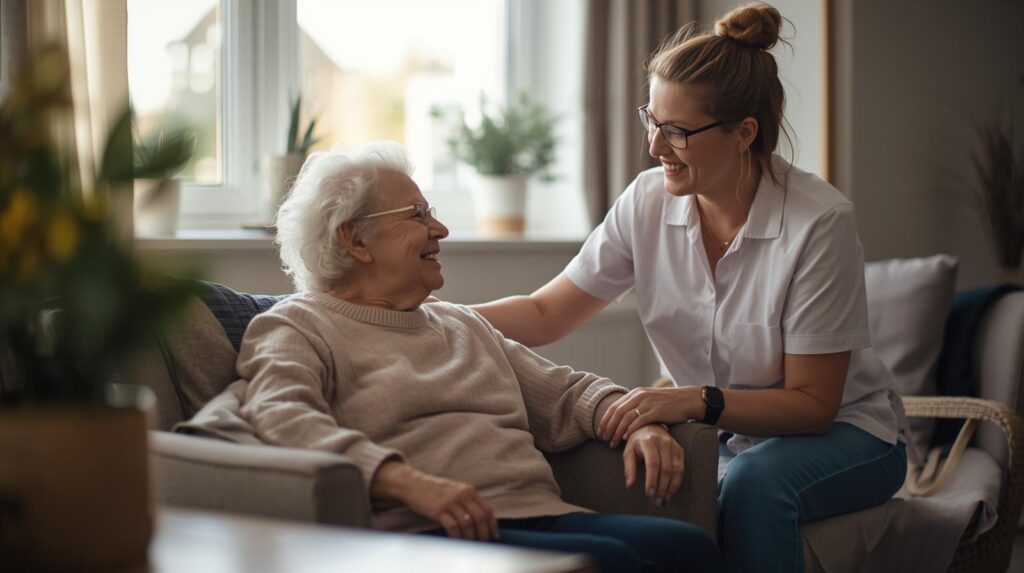
In Dundee and across Scotland, families are navigating a care landscape that looks noticeably different from even a few years ago. In 2026, the future of home care in Scotland is being shaped by two forces in particular: new technologies being introduced, and new rights around how care can be chosen and organised. And there is, running through all of it, the same enduring truth that has always defined good home care: that what matters most cannot be automated, scheduled, or digitised. It can only be delivered by people who genuinely care.
A Sector Under Pressure, But Responding
Scotland’s social care sector has faced significant strain over recent years. An ageing population, increased demand for complex care, and workforce pressures have all combined to push the system to adapt. That adaptation is now visible in two broad areas: the growing role of technology in how care is delivered and monitored, and a strengthened framework of rights that puts individuals and families at the centre of care decisions.
Neither of these is a silver bullet. But together, they represent a genuine shift in how home care works, and for families in Dundee considering home care in Dundee for themselves or a loved one, understanding both is increasingly important.
Technology in Home Care: What’s Actually Useful
The most meaningful technological developments in home care are not the flashiest ones. They are the practical tools that quietly make care safer and more responsive. Wearable monitoring devices, for example, can now track vital signs, detect changes in movement patterns, and flag unusual activity, such as a person spending longer than usual in the bathroom or a significant drop in daily steps, without requiring constant human supervision. These systems do not replace a carer’s judgement. They give carers better information to act on.
Smart home devices have also become a genuine support for older adults living alone. Voice-activated assistants can provide medication reminders, answer questions, and offer a form of responsive company during the hours between visits. For people with early-stage cognitive difficulties, consistent reminders delivered by a calm, patient device can reduce anxiety and support daily routine in ways that feel less intrusive than constant check-ins.
On the operational side, AI-assisted scheduling systems are beginning to help care providers manage rotas, match carers to clients more thoughtfully, and reduce the administrative burden that can take experienced carers away from the people they’re meant to be supporting. The Scottish Government’s own Digital Health and Care delivery plan for 2025 to 2026 acknowledges this direction: local authorities across Scotland have been trialling AI to support professionals in note-taking and records updating, with all areas of Scotland now having the option to embed AI into social work practice.
These are real, practical gains. But they come with honest limitations.
The Limits of Technology in Care
Technology is only as useful as the context in which it is used. In home care, an environment that is deeply personal, often unpredictable, and entirely dependent on trust, digital tools have a narrow role. They can support carers and provide families with greater reassurance. They cannot replace the relationship between a carer and client, the professional instinct that comes from knowing someone well, or the simple human warmth that makes a difficult day manageable.
There are also practical concerns. Despite high claims around AI in social care, no local authority in the UK has yet achieved meaningful cost savings or reduced staffing through AI alone. The need for human oversight can undermine claims of time savings, and there is a real risk of staff missing incorrect outputs if they become overly reliant on the technology. Bias is another consideration: AI systems are only as reliable as the data behind them, and in care settings, that data is rarely as complete or as representative as it needs to be.
Self-Directed Support (SDS) in Scotland: What Families in Dundee Need to Know in 2026
Alongside technology, the other major development shaping home care in Scotland is the continued expansion of Self Directed Support, also known as SDS.
SDS is a way of arranging social care that gives individuals more choice and control over how their support is organised and delivered. Instead of the council making all the decisions, SDS lets people choose who provides their support, when it happens, and how it fits into their life. For families in Dundee who have gone through a needs assessment and been found eligible for support, this framework is not just a policy position, it is a legal right, enshrined in the Social Care (Self directed Support) (Scotland) Act 2013.
In practice, SDS offers four options. A person can receive a direct payment to arrange and manage their own care. They can ask the local authority to arrange the care on their behalf while retaining a say in how it looks. They can take a combination of both. Or they can ask the council to manage everything. The principle running through all four options is that people are experts on their own lives and must be recognised as such throughout the stages of planning and accessing care.
For many families, this is a significant shift in how they think about care. Rather than accepting whatever a council allocates, SDS creates space for a genuinely personal approach, one that reflects what independence actually means to a particular person, in their particular home, at this particular point in their life.
From April 2026, the Scottish Government has also confirmed that the minimum rate of pay for Personal Assistants employed through SDS will increase to £13.45 per hour. This is a recognition that the people doing this work deserve proper valuation, and that sustainable care depends on a workforce that is fairly treated.
For families unsure where to start with SDS, a good care provider like Bentley Home Care can walk through the options clearly and help make sense of what each one means in practice, without pressure.
Why the Human Element Remains Central
All of these monitoring devices, the scheduling systems, and the legislative frameworks exist in service of something that cannot itself be systematised, the experience of being cared for with dignity, warmth, and genuine attention.
Home care is not a clinical service delivered in a controlled environment. It takes place in someone’s living room, their kitchen, their bathroom. It involves the most personal aspects of daily life. The relationship between a carer and the person they support is one of the most intimate professional relationships there is, built on consistency, patience, and the kind of trust that only develops over time and repeated contact.
No technology currently available can replicate what happens when a carer notices that someone seems quieter than usual today and sits with them for a moment rather than moving on to the next task. It cannot replace the judgement that comes from knowing a person well enough to recognise when something has shifted, not in their vital signs, but in their mood, their appetite, or the look in their eyes.
The families who contact Bentley Home Care are not, in the end, looking for a system. They are looking for someone they can trust to care for a person they love. That search does not change regardless of what technology surrounds it.
Combining Innovation With Compassion
The most effective home care in 2026 is not the most technologically advanced. It is the care that uses the right tools, in the right way, in the service of a relationship built on trust and genuine human understanding.
At Bentley Home Care in Dundee, we believe that technology has a role, in supporting our carers with better information, in giving families greater reassurance, and in helping us work more efficiently so that more time and attention can go to the people in our care. But we also believe, without reservation, that the quality of care ultimately comes down to the quality of the people delivering it.
Scotland’s care landscape is evolving. The rights available to individuals and families are stronger. The tools available to support safe, independent living at home are more capable. And the expectation is that care should be personalised, responsive, and dignified.
What has not changed, and what we hope never will, is the understanding that behind every care plan, every monitoring alert, and every scheduling system, there is a person. And people deserve more than a service, they deserve care that sees them.