
When someone you love is diagnosed with dementia, attention turns quickly to medication, safety and paperwork. Yet the first change many families notice is quieter. Dad stops phoning his friends. Mum no longer goes to the lunch club she loved. Little by little, the world starts to close in.
Alzheimer Scotland estimates that around 90,000 people in Scotland are living with dementia, many of them in their own homes. For them, regular companionship is not a luxury. It can make a real difference to how well they live with the condition.
Why Dementia Leads to Loneliness
Dementia rarely isolates someone overnight. Conversations become harder to follow, names slip away and outings that were once easy start to feel daunting. Friends, unsure what to say, visit less often. Many people in the early stages also feel embarrassed and try to hide their difficulties, so they withdraw further.
Befriending works directly on this. It brings connection to the person, on their terms and at their pace. If the idea is new to you, our guide on what a befriending service is explains the basics.
Why the Same Familiar Face Matters
Dementia makes new faces hard to place, so a different visitor each week can feel like a stream of strangers. When the same befriender comes on the same day, the person often recognises the feeling of someone safe, even if the name escapes them.
Researchers at the University of Edinburgh who studied befriending for people living alone with dementia described it as a facilitated friendship that met relationship needs otherwise going unmet. That only happens with continuity, which is why consistency sits at the centre of how we work.
How a Good Befriender Communicates
Dementia befriending asks a lot of the befriender. They answer the fourth repeated question as warmly as the first. They use short sentences, ask one thing at a time and leave plenty of time for a reply.
They also meet the person where they are. If someone says they must get home to make their husband’s tea, correcting them often causes distress. A skilled befriender responds to the feeling behind the words, perhaps a wish to feel useful or a moment of missing him, with kindness rather than argument.
Reminiscence, Music and Meaningful Moments
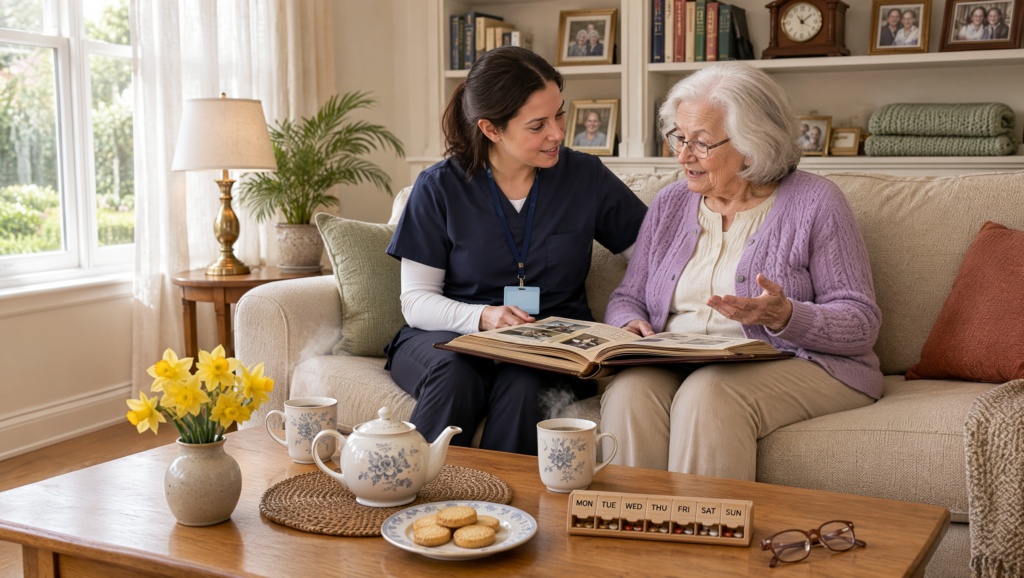
Recent memories often fade first, while older ones stay vivid. Old photographs, a favourite song from someone’s youth or talk of a first job can open up conversation when questions about yesterday cannot. Some families create a simple life story book with their befriender, which also helps anyone new who becomes involved in care.
Small shared tasks help too, such as folding laundry, potting plants or setting the table. The aim is not perfection but a sense of purpose. Gentle movement matters as well, and our article on exercise for people with dementia at home has practical ideas. For those who enjoy getting out, a befriender can help them find social activities nearby, including local memory cafés.
Adapting as Dementia Progresses
Good befriending changes as needs change. In the early stages it may mean café trips or walks along the Broughty Ferry seafront. Later, visits tend to move closer to home, with familiar routines, reminiscence and gentle prompts such as encouraging a drink, which helps guard against dehydration. In the later stages, companionship is often about presence: holding a hand, reading aloud or simply sitting quietly together.
Telephone befriending can work well early on, but calls often become harder as dementia progresses. Our comparison of telephone and in person befriending can help you decide, and many families combine a short weekly call with visits in person.
Support for Family Carers Too
While a trusted befriender spends time with your relative, you get a genuine break. Regular, predictable time off makes caring more sustainable, and our guide to respite care at home in Dundee covers further options.
A befriender who visits every week is also well placed to notice early changes, such as a poor appetite or new confusion, and share them with the family before they become a crisis. If you are unsure how much help is needed, our checklist of signs an elderly parent needs home care is a useful starting point.
How Bentley’s Homecare Can Help
At Bentley’s Homecare, we match each client with a befriender who suits their personality and interests, and we keep that relationship consistent. Our befriending is part of our PSPR plan, so companionship and wellbeing are never treated separately. Where extra help is needed, befriending can sit alongside our personal care service. You can read more about our wider approach in our article on dementia care in Dundee.
We support families across Dundee, Broughty Ferry and the surrounding areas. If you think befriending could help someone you love, get in touch for a free, no obligation chat.