A fall can change everything in a single moment, and for many older people in Dundee the worry about falling is never far away. That worry has a way of shrinking a person’s world, as trips out become less frequent and favourite activities are quietly set aside. Yet falls are not an inevitable part of growing older. Around one in three people over sixty five, and roughly half of those over eighty, have a fall each year, and most happen at home. The reassuring news is that steadiness is a skill, and like any skill it can be practised and improved.
At Bentleys Homecare, we help older people across Dundee stay steady and independent in the homes they love. This guide explains why balance changes with age, how to make your home safer, and a few gentle exercises you can build up at your own pace.
Why Balance Declines with Age
Balance is not a single sense. It relies on your vision, your inner ear and a quiet sense called proprioception, which is your body’s awareness of where your feet and joints are without looking. As we age, each of these can become a little less sharp, while the muscles in the legs and hips lose some strength and joints stiffen. Certain medications and eyesight changes add to the challenge.
The important point is that muscles and balance both respond to practice at any age. By working on strength and steadiness a little each day, you are directly addressing the very things that raise the risk of a fall, and every small success builds the confidence to stay active.
Making Your Home Safer
Since most falls happen at home, safer surroundings work hand in hand with your exercises. A short walk around each room, ideally with a family member, will help you spot hazards that are easy to overlook.
- Floors: Remove or firmly tape down loose rugs, and keep walkways clear of clutter and trailing wires.
- Lighting: Brighten hallways and stairs, and add a night light between the bedroom and bathroom.
- Stairs: Fit a secure handrail, ideally on both sides.
- Bathroom: Consider grab rails by the toilet and shower, with a non slip mat. Wet surfaces make this a common place for falls.
- Everyday items: Store what you use most within easy reach, so you never need to stretch or climb.
- Footwear: Replace worn slippers with supportive shoes that fasten securely.
Before You Begin
Speak with your GP first, particularly if you have a heart condition, dizziness, joint problems or have fallen recently. Then set up safely: stand behind a sturdy dining chair or beside a kitchen worktop so you always have something solid to hold, wear flat supportive shoes, choose a well lit and clutter free space, and keep water nearby. Move slowly and stop at once if anything causes sharp pain or dizziness.
If standing feels unsafe today, that is perfectly fine. Our guide to seated exercises for elderly people builds strength from a chair, and you can return to the movements below as you grow stronger.
Gentle Balance Exercises to Try
Begin with both hands on your support. Only move to a lighter hold once a movement feels comfortable and secure.
|
Exercise |
Main Focus |
Repetitions |
|---|---|---|
| Sit to Stand | Leg strength for rising safely | 8 to 10 rises |
| Heel Raises | Calves and ankle strength | 10 raises |
| Heel to Toe Stand | Steadiness in a narrow base | Hold 10 seconds |
| Single Leg Stand | Stability on one leg | Hold 5 to 10 seconds |
Sit to Stand
This builds the exact strength you need to get out of a chair safely, and it is one of the most useful movements for preventing falls. Sit towards the front of a firm chair with your feet flat and slightly back. Lean forward so your nose is over your toes, then push up through your legs to stand tall. Lower yourself slowly and with control. Repeat eight to ten times, using the chair arms less as you grow stronger.
Heel Raises
Holding your support, stand tall and slowly rise onto your tiptoes, lifting your heels as high as feels comfortable. Hold for two seconds, then lower with control. Repeat ten times. Strong calves and ankles give you a steadier base and help you recover if you begin to overbalance.
Heel to Toe Stand
Place one foot directly in front of the other, so the heel of your front foot almost touches the toes of the back foot. Look straight ahead and hold for ten seconds, then swap feet. This narrows your base and gently challenges your balance. Once steady, try resting only one hand on your support.
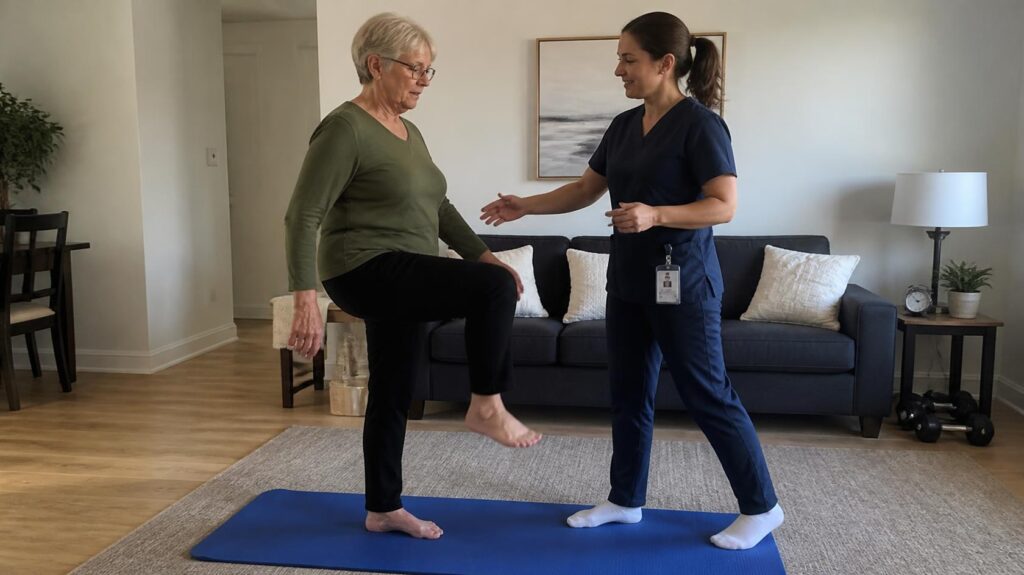
Single Leg Stand
Holding your chair, stand tall and lift one foot just a few centimetres off the floor. Balance on the standing leg for five to ten seconds, keeping your posture upright, then swap sides. This mirrors the moment when your weight is on one foot as you walk or climb stairs.
Practise for ten to fifteen minutes on most days rather than in occasional long bursts. Linking your session to something you already do, such as while the kettle boils, makes it far easier to keep going.
When to Seek Advice
Some signs are worth a word with your GP: if you have already had a fall, often feel dizzy or unsteady, notice your balance getting worse, or find yourself holding onto furniture to move around. Your GP can review your medications and eyesight and may refer you to a falls service or physiotherapist. There is no need to wait for a fall to happen. Asking early is simply good sense.
How Bentleys Homecare Can Help
Staying steady is closely tied to staying independent, which matters most to the older people we support across Dundee. Practising alone can feel daunting, especially after a fall, so our carers help set up a hazard free space, stand close by to steady you, and offer gentle encouragement. This is part of our Exercise, Rehab and Nutrition at home service, and a friendly companion also turns a daily routine into something to look forward to.
Ready to help a loved one stay steady, confident and independent at home? Our friendly team in Dundee is here to help. Get in touch with us today.